
Managing international Fertilizer Procurement Incoterms requires commercial agility and strict maritime legal compliance. Successful international fertilizer procurement hinges on precise contractual structuring across Incoterms 2020 rules (FOB, CFR, CIF), rigorous pre-shipment sampling by accredited surveyors (SGS, Bureau Veritas), and specialized maritime stowage (moisture-barrier liners, Flexitanks, anti-caking additives) to eliminate financial loss, cargo degradation, and demurrage risks during deep-sea transit.
For corporate purchasing managers, agricultural import syndicates, and industrial distributors, contracting international commodity fertilizers involves high-capital transactions where logistics execution carries equal weight to chemical specifications. Sourcing solid minerals (urea, kieserite, ammonium sulfate) or technical liquids (UAN-32, nitric acid) requires a clear understanding of international maritime protocols, port handling capabilities, and risk transfer milestones.
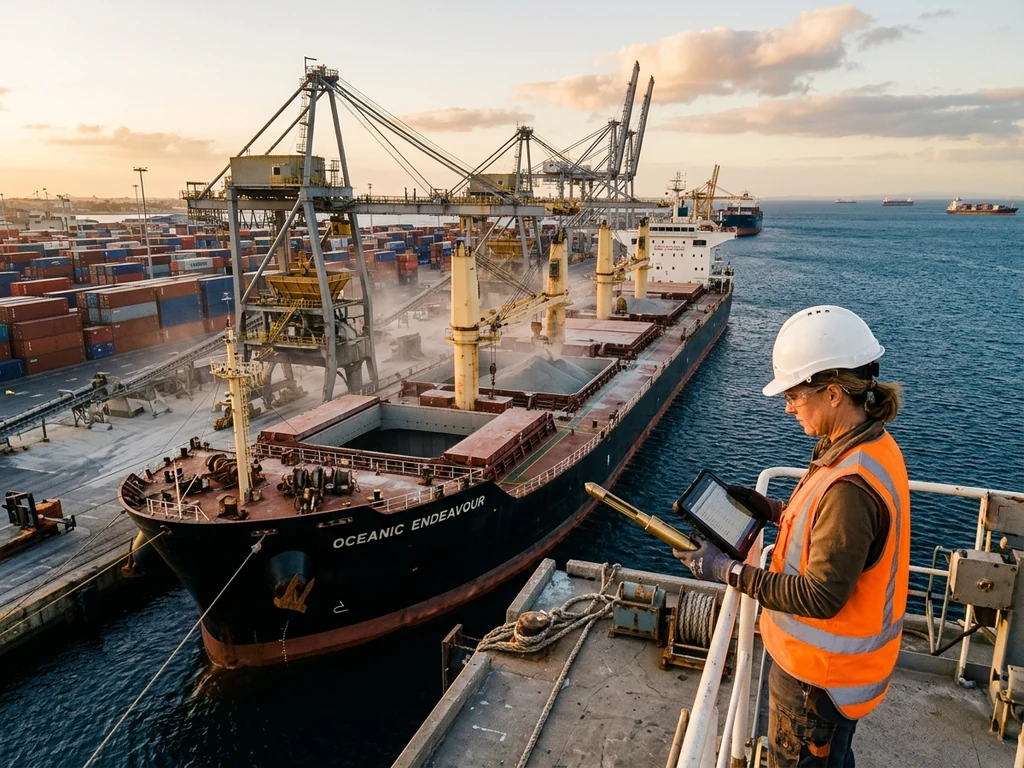
Table of Contents
1. Incoterms 2020 Allocation for Fertilizer Contracts
Selecting appropriate Fertilizer Procurement Incoterms (such as FOB, CFR, or CIF) establishes the exact point of risk transfer between supplier and buyer.
Choosing the correct International Commercial Term (Incoterm) establishes clear boundaries for freight costs, insurance liabilities, and the exact transfer point of risk:
- FOB (Free On Board – e.g., FOB Mersin / FOB Aliağa): The seller clears goods for export and delivers them on board the buyer’s nominated vessel at the origin port. Risk transfers to the buyer the moment goods cross the vessel’s rail. FOB suits large importers with established ocean chartering desks who can leverage preferential carrier freight contracts.
- CFR (Cost and Freight – e.g., CFR Alexandria / CFR Casablanca): The seller books and pays for international maritime freight to the named discharge port. However, transit marine risk transfers to the buyer once loaded on board at origin. The buyer is responsible for arranging their own marine cargo insurance.
- CIF (Cost, Insurance, and Freight): The seller covers product cost, ocean freight, and procures minimum Institute Cargo Clauses (C) or comprehensive All-Risks (A) marine insurance covering 110% of the invoice value. CIF is the preferred standard for regional distributors seeking turnkey delivered pricing.
2. Pre-Shipment Quality Assurance & Third-Party Inspection
Independent surveyors like SGS verify that commodity parameters meet contracted specifications under international Fertilizer Procurement Incoterms.
Independent third-party verification is the bedrock of cross-border agro-chemical trade. Prior to vessel dispatch or container sealing, accredited inspection agencies such as SGS, Bureau Veritas, Intertek, or Cotecna perform vital verification procedures:
Core Inspection Scope
- Draft Survey & Weighing: Precision barge/vessel draft displacement measurements or calibrated weighbridge tallies ensuring exact delivered tonnage.
- Representative Composite Sampling: Incremental sampling across conveyor belts, hoppers, or container bags conforming to ISO and GAFTA sampling standards.
- Laboratory Chemical Assay: Verifying active elemental content (total nitrogen, available P₂O₅, water-soluble K₂O, MgO, S), moisture percentages, biuret levels, and heavy metal compliance (Pb, Cd, As, Hg, Cr).
- Visual Container & Hatch Inspection: Verifying that ship cargo holds or shipping containers are clean, dry, odor-free, rust-free, and watertight before loading commences.
3. Maritime Packaging Engineering & Moisture Defense
Proper maritime packaging acts as the primary barrier against atmospheric damage throughout Fertilizer Procurement Incoterms sea voyages.
Fertilizers are hygroscopic salts; prolonged ocean transit through tropical humidity zones creates severe risks of moisture absorption, caking, and bag rupture if packaging is compromised:
- Solid Commodities (25 kg / 50 kg): Multi-layer woven polypropylene (PP) outer bags laminated with an internal polyethylene (PE) moisture-barrier extrusion liner to prevent ambient humidity ingress.
- Jumbo Big Bags (1,000 kg – 1,250 kg): Heavy-duty UV-stabilized woven polypropylene with cross-corner lifting loops, discharge spouts, and interior moisture-tight PE liners, designed for efficient vessel crane loading and container stowage.
- Liquid Chemicals (UAN-32, Acids): Multi-layer food/chemical-grade Flexitanks (24,000 Liters) installed inside reinforced 20ft dry boxes, or dedicated ISO Tank containers for hazardous chemical grades.
4. Logistics & Supply Modality Comparison Table
| Supply Modality | Typical Shipment Size | Packaging Format | Ideal Procurement Profile |
|---|---|---|---|
| Break-Bulk Charter Vessel | 1,000 to 15,000+ MT | Loose bulk in holds or Big Bags | National import syndicates, large blending plants |
| Containerized FCL (Big Bags) | 20 to 500 MT (1–20x20ft) | 1,000 kg / 1,250 kg Big Bags | Regional wholesale distributors with forklift bays |
| Containerized FCL (Palletized) | 20 to 100 MT (1–4x20ft) | 25 kg bags on shrink-wrapped pallets | Specialty retail networks, greenhouse distributors |
| Liquid Flexitank Container | 24 MT (approx. 24,000 L) | Heavy-duty multi-ply Flexitank in 20ft box | Liquid nitrogen blenders, large fertigation hubs |
5. Trade Finance & Secure International Payment Instruments
Structuring secure Letters of Credit (LC) aligned with Fertilizer Procurement Incoterms mitigates currency and counterparty risks in global transactions.
To balance supplier production lead times with buyer commercial security, international transactions are structured through standardized banking instruments:
- Telegraphic Transfer (T/T): Common for established distributor accounts. Typically executed as a 30% advance deposit to initiate packaging and port staging, with the 70% balance payable against scanned original Bills of Lading, Certificate of Analysis, Packing List, and Commercial Invoice.
- Irrevocable Confirmed Letter of Credit (L/C at Sight): The international benchmark for high-volume contracts. Issued by a prime international bank and confirmed by the seller’s bank, guaranteeing payment upon strict compliance with specified shipping and inspection documents.
6. The Strategic Hub: Mersin International Port (MIP), Türkiye
Leveraging strategic maritime hubs like Mersin Port streamlines global Fertilizer Procurement Incoterms and ensures rapid ocean transit schedules.
ADENOR Global leverages Türkiye’s premier maritime gateway, Mersin International Port (MIP). Located at the crossroads of the Mediterranean, Middle East, and Suez transit routes, Mersin provides direct feeder connections with major ocean carriers (MSC, Maersk, CMA CGM, Hapag-Lloyd, Cosco), ensuring rapid transit times, reliable container availability, and competitive ocean freight rates to Europe, Africa, the Middle East, and the Americas.
Structure Your International Fertilizer Import Contract
Contact ADENOR Global’s export desk for custom FOB/CIF quotations, SGS inspection arrangements, and current port allocation schedules.
Frequently Asked Questions
Who pays for third-party SGS or Bureau Veritas pre-shipment inspection?
In standard international trade practice, factory in-house Certificates of Analysis (COA) are provided free of charge by the manufacturer. If independent third-party surveyor inspection (SGS, Intertek) is requested by the buyer or mandated by destination import regulations, the inspection fee is typically borne by the buyer or factored into CIF contract pricing.
What is the typical transit lead time from Mersin International Port?
Direct ocean transit from Mersin to Eastern and Central Mediterranean ports averages 3 to 7 days; Western Europe (Rotterdam, Antwerp, Hamburg) averages 12 to 16 days; North Africa (Alexandria, Casablanca) averages 4 to 8 days; and the Arabian Gulf averages 14 to 20 days.
Can ADENOR Global arrange private label printed bags for destination markets?
Yes. We regularly produce OEM custom-branded 25 kg, 50 kg, and Big Bags featuring buyer corporate logos, localized regulatory compliance warnings, registration numbers, and multi-lingual technical text (English, French, Arabic, Spanish, Russian).
What documents are provided with standard export shipments?
Standard export document sets include: 3/3 Original Clean on Board Ocean Bills of Lading (B/L), Signed Commercial Invoice, Detailed Packing List, Certificate of Origin (issued by Chamber of Commerce / ATR / EUR.1 where applicable), Manufacturer Certificate of Analysis (COA), and Material Safety Data Sheet (MSDS).